

It's November!
Ready For the Holidays?
We Are!
To Gift Or To Keep? That Is The Question!
Holiday Jewels and Fun Stuff
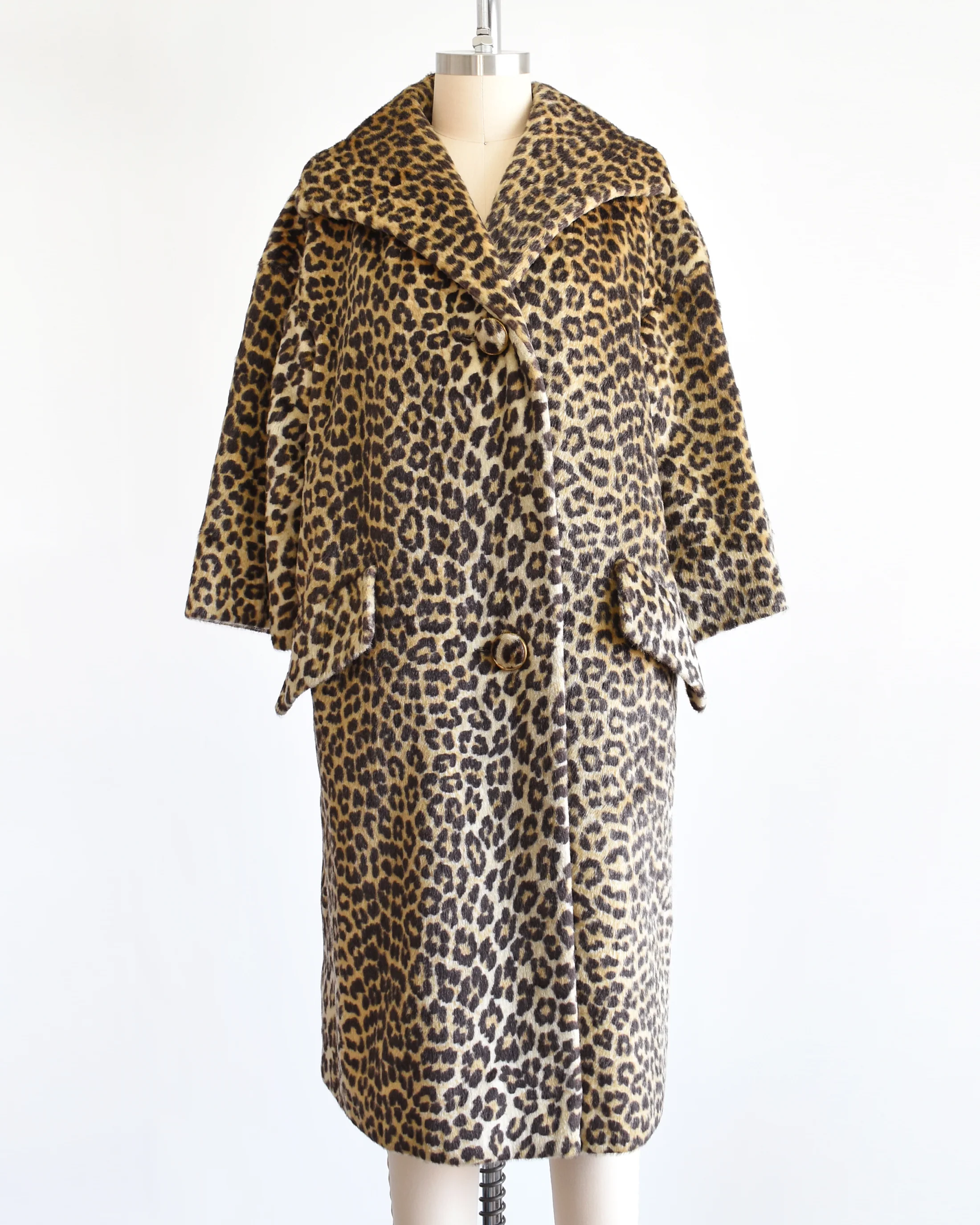
November Is The Start Of Coat Season! A Tip And Test For Buying 1960's Faux Leopard Coats And Hats!
Many (but not all) 1960s vintage faux leopard fur coats and hats were manufactured with a thin layer of sponge rubber on the backing of the fabric under the lining. Over time this layer of sponge can deteriorate and migrate out of the lining as a fine dust. It is not good to breathe in, and it will certainly get all over your clothes, your house and everything else in between.
So, how to test? To see if a coat or hat has this "sponge backing", closely inspect the lining. The best test is to tap the lining on the palm of your hand to see if a fine dust comes out. It can sometimes be hard to see. But if you run your finger over your palm, you can feel the granules. The backing is usually a yellowish or pinkish color.
So, unless you want to remove the entire lining, you would have to wear a good mask and do it in a safe area. I am not even sure where a safe area would be. If you do it outside, it is not safe for the environment. It is also not safe for pets to breathe in. And it would cost a pretty penny to get it relined.
If you find those little granules, I would pass on that purchase, because, again, the deterioration will continue to shed. Below is a photo of a 1960s faux leopard coat.
Jewelry Lore- Snake Jewelry - Eternal Love And Beyond
When you think of the origins of snake jewelry, some may think of Cleopatra. (Well, I do). But in the 19th century, snake-shaped jewelry became very popular after Queen Victoria received a snake ring from Prince Albert. It symbolized eternal love.
Many moons later, it became a symbol of heavy metal fans, snake lovers, the occult, and very popular tattoos—and still is.
Snakes even showed up in downright silly costume jewelry pieces, as shown below in one of our vintage pins:
|
Vintage Anthropomorphic Snake Pin Signed JJ
$48.00
|
November's Fun Fact
Did you know that November is the only month that doesn’t have a full moon?
Who knew?
You received this because you signed up at Moonlight Martini.
Unsubscribe
Unsubscribe
Questions or Comments?
Just reply to this email — we read every response.
Just reply to this email — we read every response.